
Design Ideas
Printed and Photo Roller Blinds: When a Pattern Works on Your Window
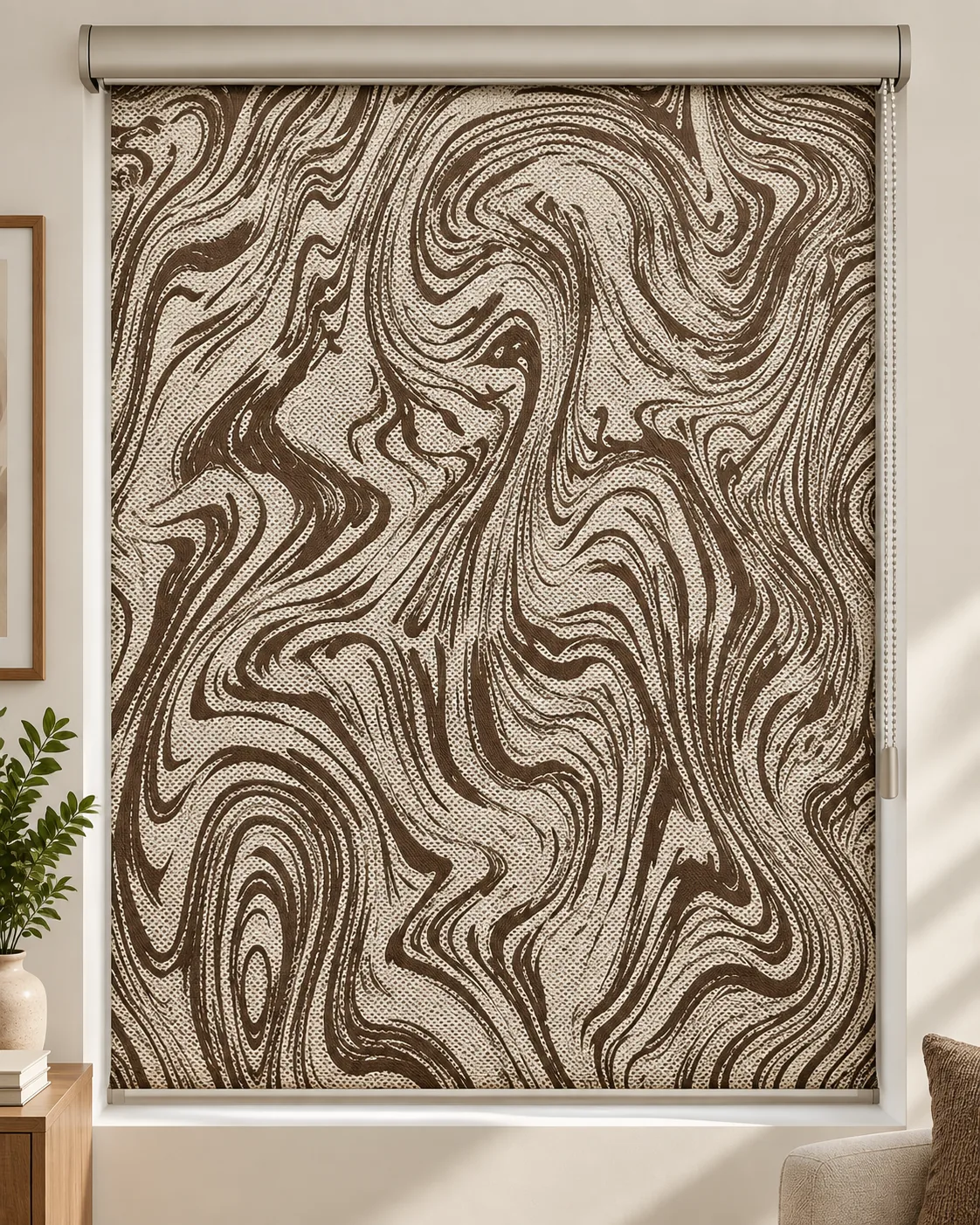
A printed blind is a picture you will see every day. Choose it like art, not like wallpaper.
Most roller blinds are plain or subtly textured. But fabrics can also be printed — with geometric patterns, florals, children’s illustrations, city skylines, brand logos or even your own photograph. A printed blind can be the focal point of a room. It can also be overwhelming if chosen badly. Here is a guide.
Types of printed blinds
- Pattern fabrics: stock designs such as geometric, botanical, damask or stripes.
- Themed prints: children’s designs, maps, skylines.
- Custom photo or graphic prints: your own image or brand artwork printed to size.
How light affects prints
On light-filtering fabric, a print glows when the sun is behind it and can look different from day to night. On blackout fabric, the print is seen mainly from inside and stays consistent. Printing on dark fabrics is less effective. Ask how the print looks backlit before ordering.
Where printed blinds work well
- Kids’ rooms: playful themes — but choose ones they will not outgrow too quickly.
- Playrooms and study corners: maps or educational graphics.
- Shops, cafés and clinics: brand colours and logos on shopfront or reception windows. Read blinds for shops and showrooms.
- Accent windows: one statement blind in a hallway, staircase or dining area.
Where plain is usually better
- Rooms with patterned curtains, wallpaper or busy furniture.
- Large windows split into several blinds — prints may not line up across them.
- Rooms you may redecorate soon.
- Bedrooms where calm matters most.
Choosing a print
- Decide the role: focal point or background texture?
- Pick colours already present in the room.
- Consider scale — large prints suit big windows; small prints can look busy on large areas.
- Check how the print is positioned on the blind, especially for logos and photos.
Custom photo blinds: tips
- Use a high-resolution image — low resolution looks blurry at window size.
- Consider how the image looks when partly rolled up; the bottom part is visible most often.
- Avoid important details near the edges where brackets or side gaps sit.
Durability
Quality printed fabrics use fade-resistant inks, but bright prints in strong west sun will fade over time like any colour. Place printed blinds on windows with moderate sun, or accept gradual change.
Kids’ rooms: future-proofing
Cartoon characters can feel babyish within a couple of years. Consider timeless patterns — stars, clouds, animals in simple shapes — or put the theme into bedding and wall art while keeping the blind neutral. Read the kids room blinds guide.
Alternatives to printed blinds
If you want interest without committing to a print, consider textured fabrics or zebra blinds, whose alternating bands create pattern through light. See textured and linen-look rollers.
Cost
Printed and custom fabrics usually cost more than standard plain ones. Plain roller blinds at BlindsBazaar run ₹100–₹250 per sq ft (most ₹100–₹130), GST included, with a 3-year warranty. Ask about printed options when ordering.
Printed blinds for businesses
For shops, cafés and clinics, a printed blind can carry the logo or brand colours on a street-facing window, turning it into signage after hours. Keep text large and simple, check how it reads from the street when the blind is lowered, and remember the print appears reversed from outside on light-filtering fabric.
Combining print and plain
In a room with several windows, one printed blind on a feature window and plain blinds elsewhere often looks more considered than prints everywhere.
FAQs
Can I print my own photo on a blind?
Custom photo printing is possible with suitable fabrics and high-resolution images. Ask about availability and lead times.
Do printed blinds show from outside?
On light-filtering fabric, the print shows from both sides, reversed from outside. On blackout, the back is plain.
Not sure of your sizes?
Read our measuring guide or try the AR self-measure tool to get exact numbers.