
Room Guides
Blinds for an Open Kitchen and Living Room: One Space, Two Needs
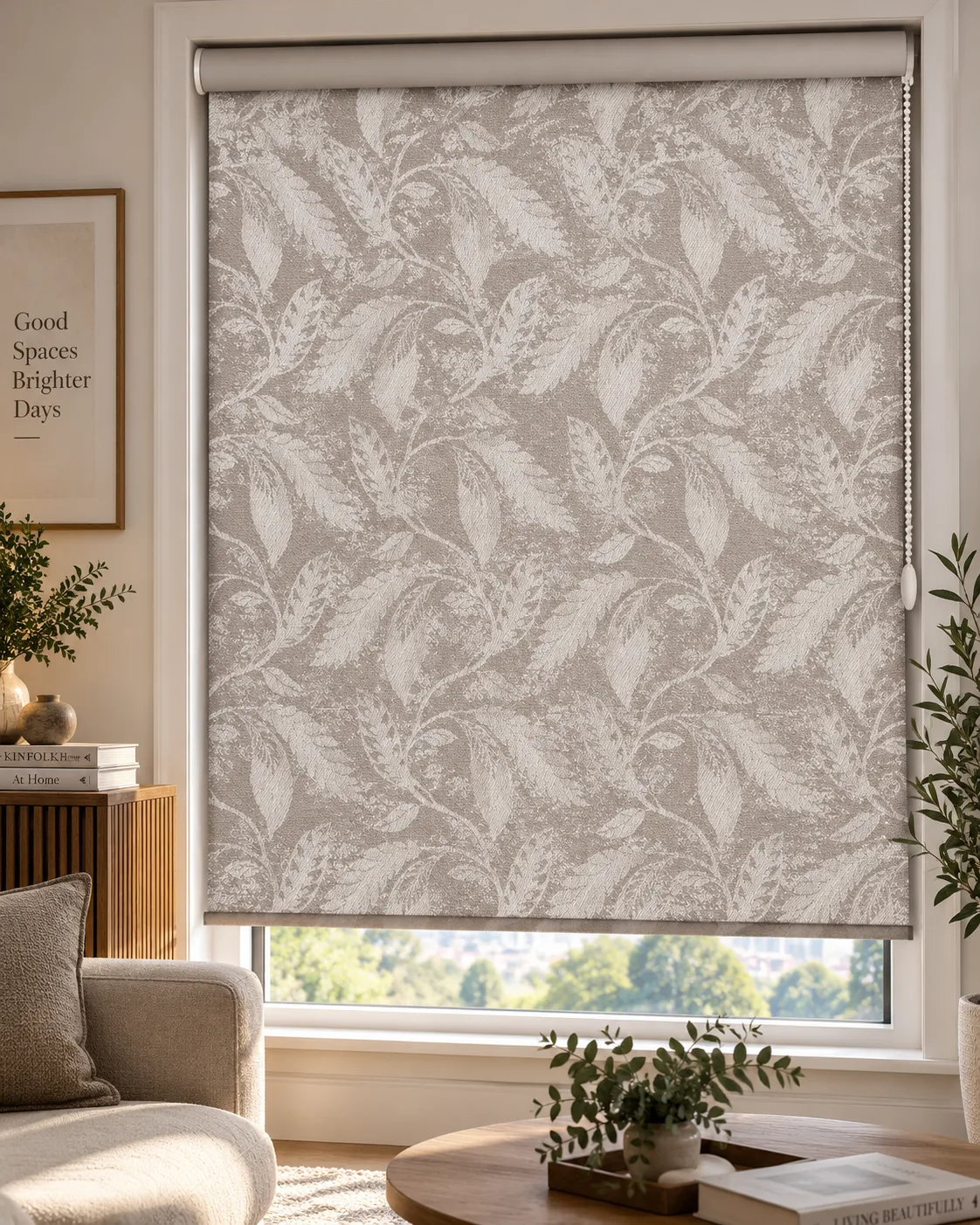
In an open plan, the kitchen window and the living room window are in the same photograph.
Open-plan kitchens joined to living and dining areas are now common in new Indian flats and builder floors. They feel spacious and sociable, but window treatments get tricky: the kitchen window faces grease and steam, the living room window faces sun and TV glare, and both are seen together. Here is how to plan blinds that work as one design.
Design principle: one family of fabric
Because the spaces are visible together, mismatched blinds look unplanned. Choose one colour family and similar fabric look for all windows in the open area, even if the specific fabric type differs. For example, a moisture-resistant roller in warm grey near the kitchen and a warm grey zebra in the living area.
Kitchen side: practical first
- Moisture- and grease-resistant fabric: smooth polyester or PVC-coated rollers wipe clean easily.
- Safe distance from the hob: keep blinds well away from the gas burner; never use loose curtains near flames.
- Inside mount above the counter so the blind does not hang over the sink or cooktop.
- Mid-tone colour hides splashes better than white.
Read our kitchen blinds guide.
Living side: light and glare
The living room window often needs glare control for the TV and comfort in the afternoon. Zebra blinds give adjustable light; sunscreen rollers keep the view while cutting glare. For street-facing living rooms, choose a fabric that gives privacy at night.
Dining zone
A dining table near a window benefits from soft, filtered light — no direct sun on the table at lunch. A light-filtering roller or zebra works well. See dining room blinds.
Balancing smells and smoke
Indian cooking produces smoke and strong aromas that travel across open plans. Fabric near the kitchen absorbs them over time. Smooth, synthetic fabrics release smells more easily than natural textures, and regular airing helps. A chimney and exhaust fan reduce the problem at the source.
Match the hardware
Use the same bracket colour, chain colour and bottom bar finish across all blinds in the open space. Cassettes in a matching finish give a unified look. Read cassette vs open roller.
Heights and alignment
Align the tops of blinds across different windows where possible — ideally at the same height below the ceiling. Even if window sizes differ, a consistent top line makes the open space look calm.
A sample plan for a 2BHK open-plan flat
- Kitchen window: warm grey moisture-resistant roller, inside mount.
- Dining window: warm grey light-filtering roller.
- Living room balcony door: warm grey zebra blind, outside mount above the frame.
Three different functions, one look.
Cost
For the plan above — a 3×3 ft kitchen window (billed at 10 sq ft), a 4×4 ft dining window (16 sq ft) and a 6×7 ft balcony door (42 sq ft) — expect roughly ₹6,500–₹10,000 depending on fabric, GST included. Rollers run ₹100–₹250 per sq ft and zebras ₹120–₹190. Every order has a 3-year warranty.
Common mistakes
- Choosing a delicate textured fabric near the hob.
- Different colours on each window in one open space.
- Blinds hanging into the sink or onto the counter.
- Sheer living room fabric that gives no privacy at night.
Planned together, the windows of an open space look like one considered design rather than three separate purchases.
Lighting the open space at night
In the evening, lowered blinds become a backdrop for the room’s lighting. Warm-toned fabrics reflect pendant and cove lighting softly, making a large open space feel cosier.
FAQs
Can I use zebra blinds in the kitchen?
They work, but sheer bands collect grease. A smooth roller is easier near the hob; use zebra on living-side windows.
Should all blinds in an open plan be the same type?
Not necessarily — the same colour family and finish matter more than identical type.
Not sure of your sizes?
Read our measuring guide or try the AR self-measure tool to get exact numbers.