
Room Guides
Home Theatre and Media Room Blinds: Cinema-Dark at Any Time of Day
A projector is only as good as the darkness around it.
A home theatre or media room is one of the most rewarding upgrades in a home — until afternoon sun turns the projector image grey or bounces off the TV. Light control is as important as the screen. Here is how to make a media room truly dark.
Why darkness matters for screens
Projectors depend on contrast. Any light falling on the screen raises black levels and washes out colour. Large TVs suffer from reflections from windows. Even a thin strip of light around a blind can be distracting in a dark room.
The foundation: blackout roller blinds
A blackout roller blind blocks nearly all light through the fabric. It is the standard choice for home theatres. Read how blackout blinds work.
Eliminating light gaps
Fabric alone is not enough. Light leaks at the sides, top and bottom. For a media room:
- Side channels: fabric runs inside tracks on both sides, sealing edge gaps. The darkest option.
- Cassette: covers the top roll and reduces top leakage.
- Generous outside mount: overlap the opening by 10 cm or more on each side if channels are not used.
- Floor or sill seal: bring the blind down to the sill or slightly below.
Our guide to fixing light gaps explains each method.
Choose non-reflective colours
Light-coloured walls and blinds reflect projector light back onto the screen, reducing contrast. Dark, matte blind fabrics — charcoal, black, deep navy — absorb stray light. The side facing the window can still be light to reflect heat.
Layer with heavy curtains
For a dedicated theatre, a blackout roller plus heavy, dark acoustic curtains gives the best darkness and also softens sound reflections from glass. Curtains on a ceiling track across the entire wall make the window disappear.
Motorisation and scenes
Motorised blinds make a media room feel like a cinema: one button or voice command lowers all blinds together. With smart home integration, a "movie" scene can close blinds and dim lights at once. Motorisation adds roughly ₹3,000–₹6,500 per window. See smart blinds in India.
Living rooms that double as media rooms
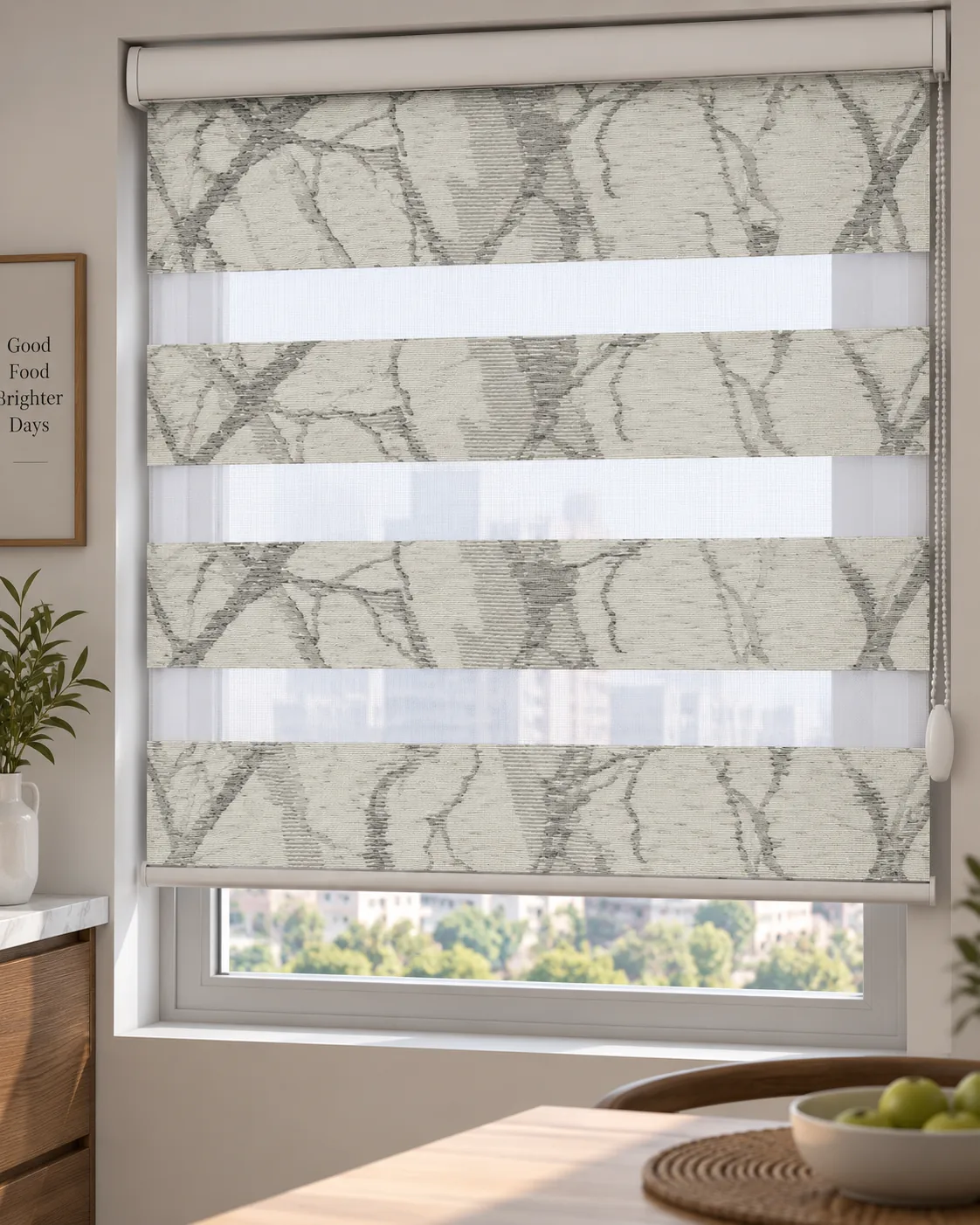
Most Indian homes do not have a dedicated theatre — the living room is where movies happen. A blackout roller behind a zebra blind or sheer curtain gives daytime light and evening darkness. Alternatively, a dual roller (sheer plus blackout) works well. Read dual roller vs zebra.
Heat and ventilation
Dark rooms with equipment get warm. Blackout fabric with a reflective back reduces solar heat during the day, helping the AC. Keep blinds clear of projector vents and equipment.
Cost example
A media room with two 5×5 ft windows (50 sq ft) in blackout roller fabric typically sits in the upper part of the ₹100–₹250 per sq ft range, GST included. Side channels and motors add to the cost. Every order includes a 3-year warranty on fabric, mechanism and motor.
A home theatre window checklist
- Blackout fabric, dark matte face to the room.
- Side channels or 10 cm+ overlap.
- Cassette over the roll.
- Blind reaching the sill.
- Optional heavy curtains for sound and extra darkness.
- Motorised group control.
Daytime viewing in a living room
If your living room doubles as a cinema, test the room at the time you usually watch — often Sunday afternoon. Lower all blinds and look at the screen from your usual seat. Any window still causing reflections needs a denser fabric or better overlap. Fixing the one problem window often matters more than upgrading every blind in the room.
FAQs
Can a room be completely dark with roller blinds?
Very close, especially with side channels and a cassette. Small gaps may remain without curtains.
Does blind colour affect the picture?
Yes — dark, matte surfaces reduce reflected light and improve contrast.
Not sure of your sizes?
Read our measuring guide or try the AR self-measure tool to get exact numbers.