
Room Guides
Blinds for West-Facing Rooms: Beating the 3 pm Sun
East light wakes you up. West light cooks the sofa.
In Indian cities, a west-facing room is the one that becomes unbearable after lunch. The sun is low, direct and hot, hitting the glass at the hottest time of day. Furniture fades, the AC runs at full power and the TV becomes unwatchable. The right blind makes a huge difference — but the wrong one barely helps.
Why west sun is so hard to control
- Low angle: afternoon sun comes in almost horizontally, reaching deep into the room.
- Peak heat: it arrives when outdoor temperatures are highest, adding to an already warm room.
- Long exposure: in summer, it can shine directly from around 2 pm until sunset.
The best blind types for west-facing windows
Blackout roller with a reflective back
The most effective option for bedrooms. A blackout fabric with a white or silver-coated back reflects a large part of the sun’s heat back through the glass before it warms the room. Read how blackout blinds work.
Sunscreen roller
For living rooms where you want the view, a sunscreen fabric with low openness (1–3%) cuts glare and a significant share of heat while keeping you connected to the outside. Darker sunscreen colours give a clearer view; lighter ones reflect more heat. See our openness factor guide.
Zebra blinds
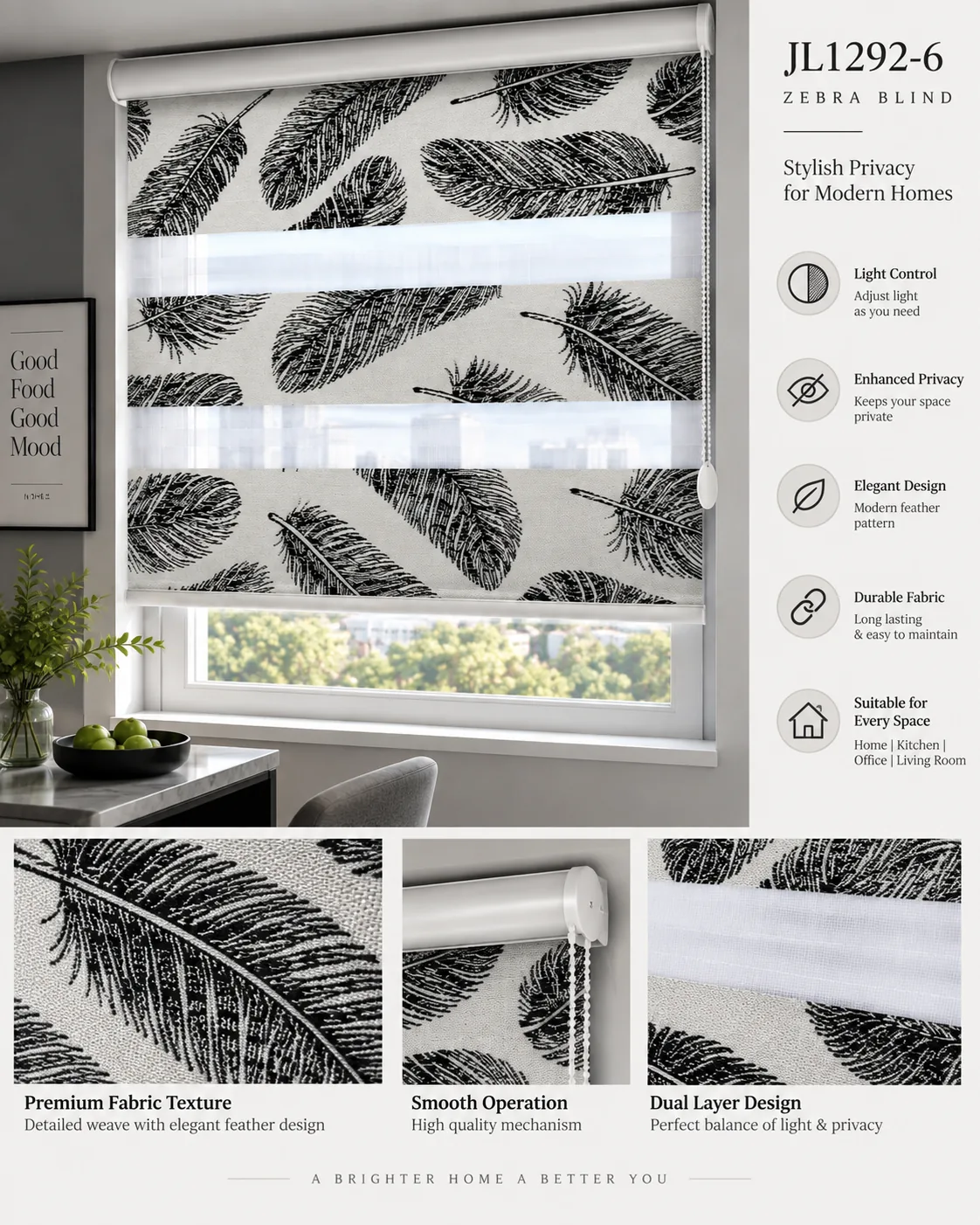
Zebra blinds work well in west rooms used morning and evening: open in the morning, close the solid bands from 2 pm. They insulate less than a full blackout, so pair them with good habits.
Fabric colour matters
The side facing the window does most of the work. A light-coloured or reflective outer face bounces heat away. You can still choose a darker colour facing the room for décor. Ask for fabrics with a light back for west windows.
Fit matters even more
Sun leaking around the edges of a blind defeats much of its purpose. For west-facing rooms:
- Use outside mount with 7–10 cm overlap on each side, or a snug inside mount.
- Bring the blind down to the sill, not a few centimetres above.
- Consider side channels on bedroom windows for near-total darkness.
Our guide on fixing light gaps explains each option.
A daily routine for west rooms
- Morning: blinds open — no direct sun yet.
- From around 1:30–2 pm: lower blinds before the sun hits the glass, not after the room is hot.
- After sunset: raise them again to let the room cool if windows can be opened.
A motorised blind on a schedule handles this automatically — useful when nobody is home in the afternoon. Motorisation adds roughly ₹3,000–₹6,500 per window.
Protecting furniture and floors
West sun fades sofas, wooden floors and artwork faster than any other direction. Blinds with UV-resistant fabric reduce this significantly. Lower them during the afternoon even if you are not in the room.
What it costs
For a 5×5 ft west-facing bedroom window (25 sq ft), a blackout roller typically sits in the upper part of the ₹100–₹250 per sq ft roller range; a sunscreen roller for a 6×5 ft living room window (30 sq ft) costs roughly ₹3,000–₹4,500 depending on fabric. All prices include GST, with a 3-year warranty. See the price guide.
Mistakes to avoid
- Choosing thin, light-filtering fabric for a west bedroom — it glows orange and stays hot.
- Dark-backed fabric facing the glass — absorbs and radiates heat into the room.
- Blinds that stop short of the sill.
- Waiting until the room is already hot to lower them.
FAQs
Do blinds reduce room temperature?
They reduce how much solar heat enters, which lowers the cooling load. The effect is strongest with reflective, well-fitted blinds. Read what works in Delhi heat.
Are curtains better than blinds for west rooms?
Heavy lined curtains help, but blinds fit closer to the glass and block heat earlier. A blind plus curtain is the strongest combination.
Not sure of your sizes?
Read our measuring guide or try the AR self-measure tool to get exact numbers.