
Buying Guides
Blinds for Homes With Cats and Dogs: Durable, Safe and Easy to Clean
Cats see a window as a television. Your blind just needs to survive the show.
Pets love windows. Cats sit on sills watching birds, dogs stand guard at balcony doors, and both leave fur, nose prints and the occasional claw mark. Some blinds survive that well; others are bent and torn within weeks. Here is how to choose blinds for a home with pets.
What pets do to blinds
- Bending slats: cats and dogs push through venetian slats to look out, leaving permanent dents.
- Clawing fabric: loose or textured fabric at the bottom becomes a scratching target.
- Chewing cords: puppies and kittens chew dangling cords.
- Fur and dust: static and texture hold pet hair.
- Nose prints and drool: on the lower part of the blind.
The most pet-friendly blinds
Roller blinds
A flat roller blind has no slats to bend and no gaps to push through. It can be raised just above sill height so a cat can sit and watch underneath without touching the fabric. Smooth polyester fabrics shed fur easily with a lint roller or vacuum.
Zebra blinds
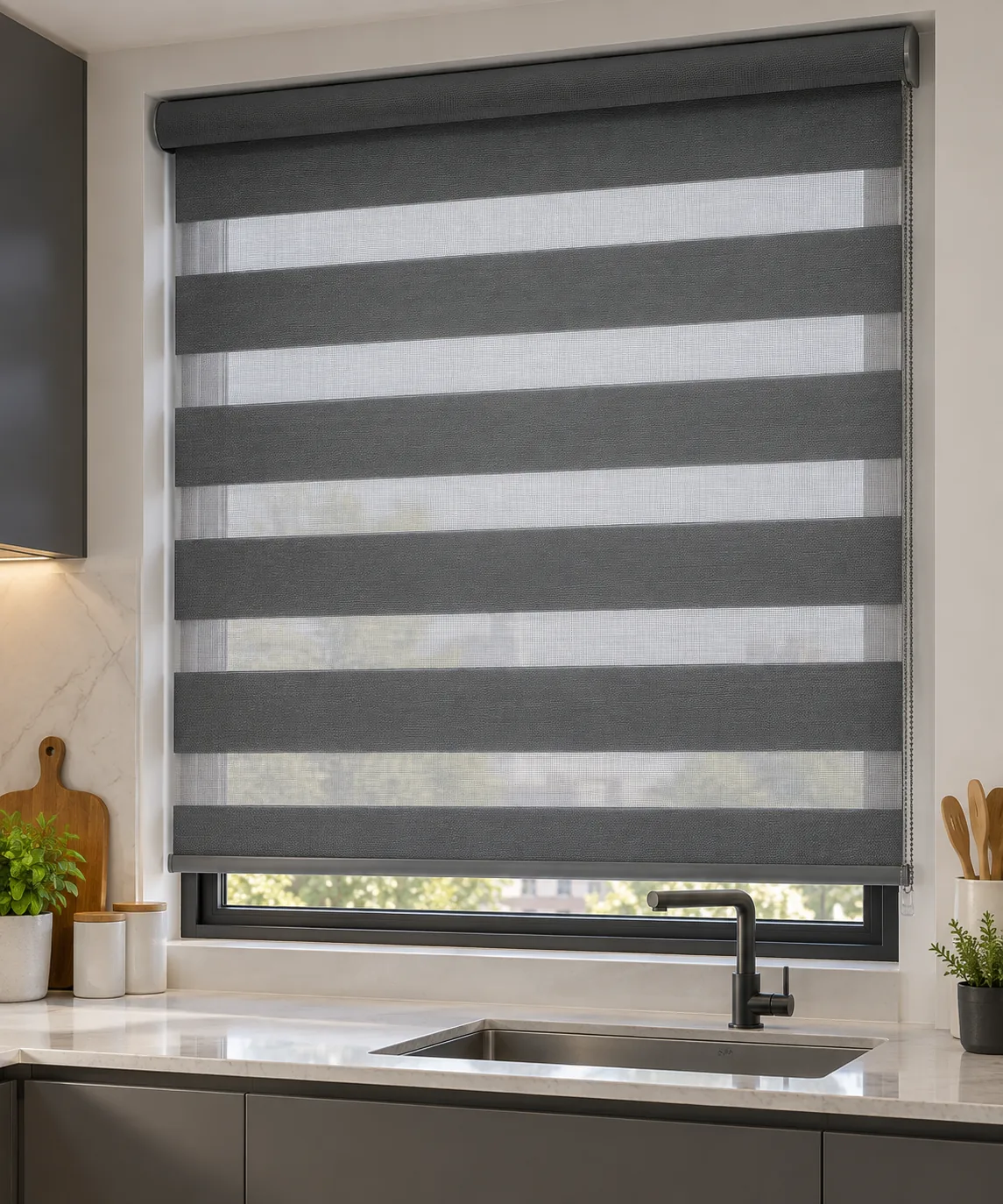
Zebra blinds are also flat and durable. Keep the bottom bar a little above the sill if pets like to sit there.
Blinds to avoid with pets
- Aluminium venetians — slats bend easily.
- Vertical blinds — pets push between vanes, and vanes swing and break.
- Loose-weave or textured fabrics near the floor — easy to claw.
- Bamboo chicks — chewing and scratching damage them fast.
Safety: cords and chains
Dangling cords and chain loops are a real hazard for pets, just as for children. Choose:
- Motorised blinds: no cords at all.
- Chain tensioners: fix the chain taut to the wall so it cannot form a loop.
- Cordless spring systems where available.
Our safety audit for kids and pets walks through every risk.
Fabric choices for pet homes
- Smooth, tightly woven polyester resists claws and sheds fur.
- Mid-tone colours hide fur better than pure white or black.
- Stain-resistant finishes make nose prints easy to wipe.
Placement tricks
- Set the lowered position a few centimetres above the sill so pets can sit underneath.
- Give cats a dedicated window perch away from the blind.
- For dogs at balcony doors, mount the blind outside the frame so they do not brush against it.
- Use an inside mount where pets would knock an outside-mounted blind.
Cleaning pet hair
- Lower the blind fully.
- Use a lint roller or a rubber glove wiped downward to collect fur.
- Vacuum with a soft brush on low suction.
- Spot clean nose prints with a damp cloth and mild soap.
Full method in our roller blind washing guide.
Warranty note
Pet damage — scratches, chewing, tears — is not a manufacturing defect, so it is excluded from blind warranties everywhere. That is another reason to choose durable, pet-friendly designs from the start.
Cost
Made-to-measure rollers start at ₹100 per sq ft and zebras at ₹120, GST included. Motorisation adds roughly ₹3,000–₹6,500 per window — worth it in rooms where pets spend time alone.
Room-by-room tips for pet owners
- Living room: a roller or zebra blind stopped just above the sofa-side sill, so cats can still watch the street.
- Bedroom: blackout roller with a motor, so no chain hangs near the bed where pets sleep.
- Balcony door: outside-mounted blind well clear of the floor, so dogs do not push their noses into the fabric.
- Kitchen: wipeable fabric that copes with paw prints on the sill and the occasional splash.
Choosing the right blind once is far cheaper than replacing bent slats and chewed cords every few months.
FAQs
Which blind is best if my cat climbs?
A roller blind raised slightly above the sill, with no cords. Cats lose interest in a flat fabric they cannot grip.
Are motorised blinds safe for pets?
Yes — no cords or chains. Most motors stop if they meet resistance.
Not sure of your sizes?
Read our measuring guide or try the AR self-measure tool to get exact numbers.