
Explainers
Aluminium Venetian Blinds: Slat Sizes, Finishes and Honest Pros and Cons
Aluminium slats shrug off humidity. Dust is another story.
Aluminium venetian blinds — thin horizontal metal slats that tilt open and closed — were the standard office blind in India for decades. You still see them in clinics, banks, older flats and bathrooms. They are durable and handle humidity well, but they come with trade-offs. Here is a complete guide.
How aluminium venetian blinds work
Slats hang on ladder strings. A tilt wand or cord rotates every slat at once, angling light up, down or blocking it. A separate lift cord pulls the whole stack up. Because the slats are metal, they stay flat and do not absorb moisture.
Slat sizes explained
- 16 mm (micro): very fine, delicate look; best on small windows and inside narrow frames.
- 25 mm (standard): the most common size; balanced look and light control.
- 50 mm (wide): bolder and more modern; better view when open, but deeper stack when raised.
Wider slats need more depth inside the window recess, which matters on shallow Indian sliding windows.
Finishes and colours
Aluminium slats come in matte, gloss, metallic, brushed and perforated finishes. Perforated slats let a little light through even when closed — useful in offices. Light colours reflect heat; dark finishes look sleek but absorb more of it.
Where aluminium venetians work well
- Bathrooms and wet areas: metal does not rot or swell. Pair with the right ventilation.
- Clinics and labs: wipeable surfaces and precise light angle control.
- Older offices: matching existing fit-outs.
- Kitchens: moisture-proof, though grease needs regular wiping.
The downsides
- Dust on every slat: a 5 ft blind can have 60–80 slats. In Delhi NCR that means frequent cleaning.
- Noise: slats rattle when a fan or AC blows on them or a window is open.
- Bending: slats dent easily if pulled, leaned on or hit by children and pets.
- Light leaks: never fully dark — light passes through slat edges and cord holes.
- Cord maintenance: ladder strings and lift cords fray over the years.
Aluminium vs wooden venetians
Wooden venetians are warmer and richer but heavier, more expensive and can warp in humid rooms. Aluminium is lighter, cheaper and moisture-proof. Our article on made-to-measure venetians compares aluminium and oak in detail.
Modern alternatives to consider
Roller blinds
One flat fabric surface instead of dozens of slats. Quiet, easy to clean and available in true blackout. Moisture-resistant fabrics suit bathrooms and kitchens. Browse roller blinds from ₹100 per sq ft.
Zebra blinds
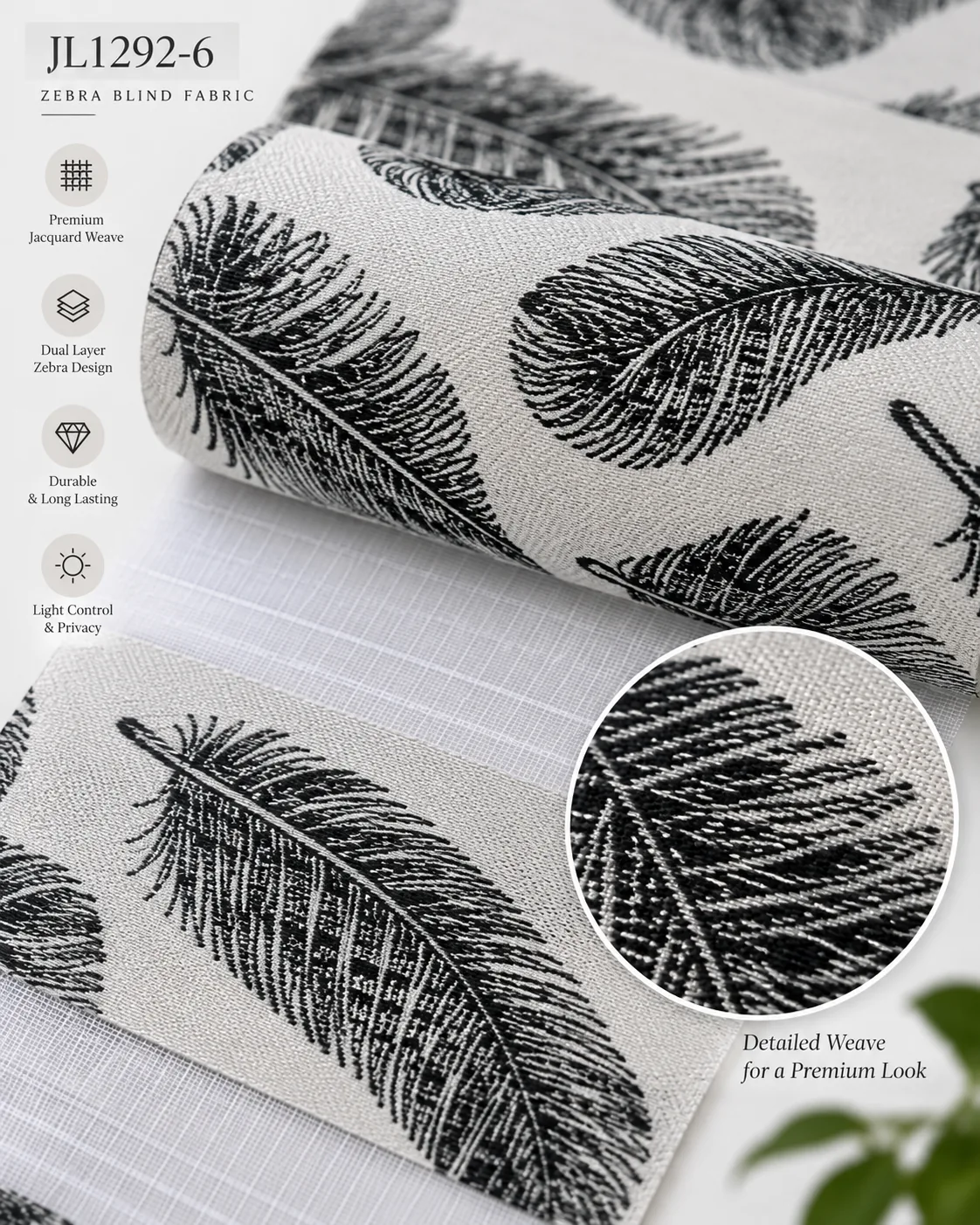
If you like the light control of tilting slats, zebra blinds give a similar effect with alternating sheer and solid fabric bands — no rattle, much less dust. From ₹120 per sq ft, GST included.
Read the full comparison in venetian vs roller blinds.
How to clean aluminium venetians
- Close the slats flat and dust with a microfibre cloth or slat-cleaning brush.
- Turn slats the other way and repeat.
- For grease, wipe with a cloth dampened in mild soapy water, then dry.
- Never soak — water can rust the headrail and damage cords.
Who should still buy aluminium venetians?
Choose them if you specifically want angled light control in a wet room, you need to match an existing office look, or you prefer a structured, linear style and do not mind regular dusting. For most bedrooms and living rooms in dusty cities, fabric blinds are easier to live with.
Checklist before ordering venetians
- Measure recess depth — wide slats need more space.
- Check where fans and AC vents blow, to avoid constant rattling.
- Decide wand or cord tilt — wands are safer near children.
- Choose a finish that hides dust if the room is near a road.
FAQs
Are aluminium blinds good for bathrooms?
Yes, they handle humidity well. A PVC or moisture-resistant roller is an alternative with less cleaning — see PVC bathroom blinds.
Do aluminium blinds keep heat out?
Closed light-coloured slats reflect some heat, but gaps between slats let heat through. A blackout or sunscreen roller with a reflective back performs better.
Not sure of your sizes?
Read our measuring guide or try the AR self-measure tool to get exact numbers.