
Room Guides
Pooja Room Window Blinds: Soft Light, Privacy and Safety Near Diyas
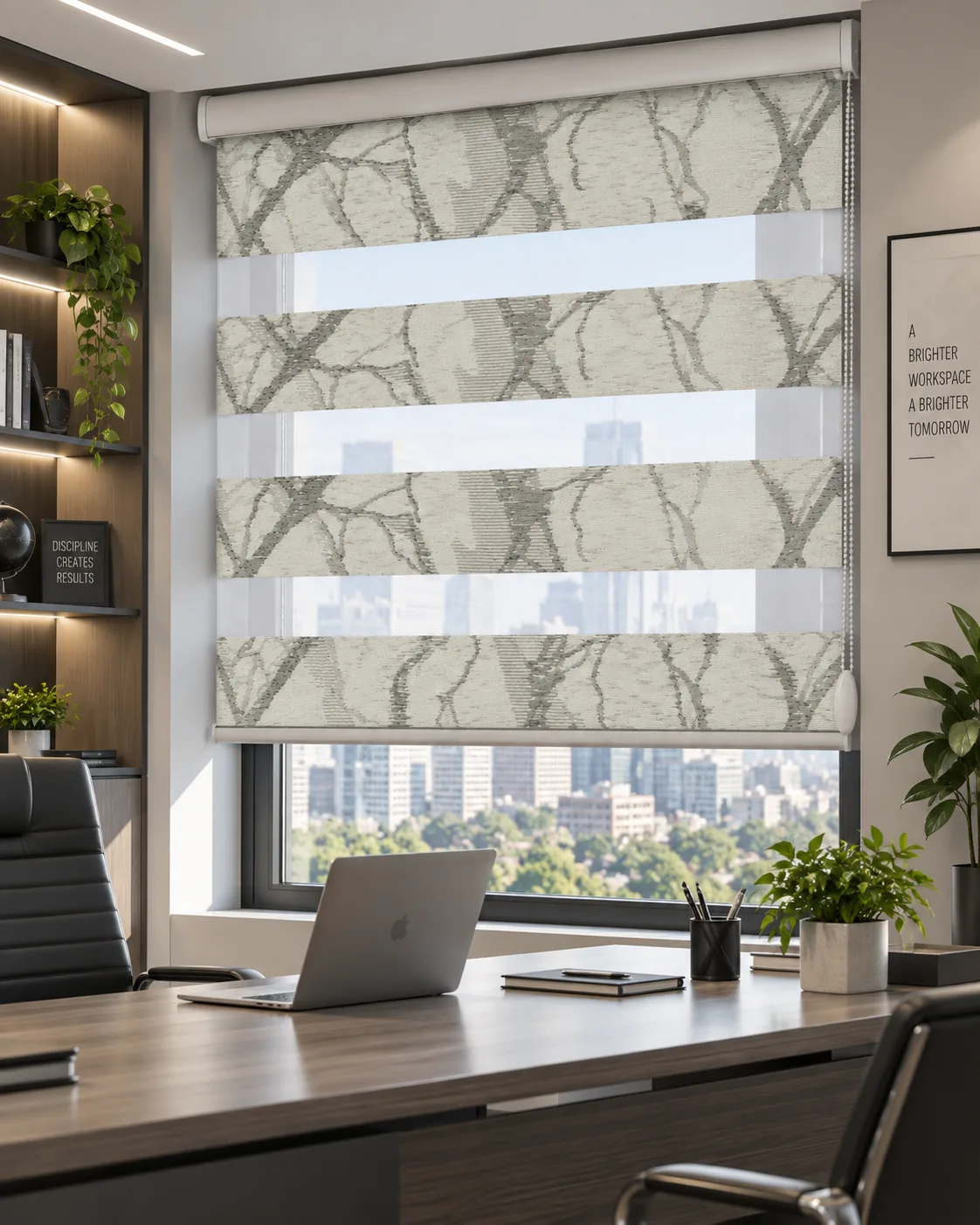
A mandir window should bring in morning light and keep out the street — and never sit close to a flame.
Many Indian homes have a dedicated pooja room or a mandir corner with a small window. It is a place for quiet morning prayer, lamps and incense. The window treatment there should feel calm, let in gentle light, keep the space private — and above all, be safe around open flames.
What a pooja room window needs
- Soft, natural morning light rather than harsh glare.
- Privacy from neighbouring flats or the street.
- Fire safety around diyas, candles and agarbatti.
- Easy cleaning — incense smoke and soot settle on fabric.
- A serene look that does not compete with the mandir.
Best blind choices
Light-filtering roller blind
A translucent roller blind softens light into a warm glow while blocking the view in from outside. It is flat and simple, so it stays visually quiet. It rolls up completely when you want the window open for fresh air.
Zebra blind
A zebra blind lets you let in more light in the morning and switch to solid bands for privacy later, without fully raising it.
Fire safety comes first
This is the most important part of choosing a pooja room blind:
- Never place diyas, candles or incense holders on the window sill directly below a blind.
- Keep at least 30 cm between any flame and the fabric, even when the blind is lowered.
- Consider outside mount on the wall above the window so the fabric hangs further from a mandir that sits close to the window.
- Avoid loose, flowing curtains in small pooja rooms — a fixed, flat roller is safer because it does not drift in a breeze.
- If fire resistance matters, ask about fabrics with flame-retardant treatment.
Smoke, soot and cleaning
Daily agarbatti and diyas leave a fine layer of soot over time. Choose a fabric that can be wiped: a dense, smooth polyester roller cleans more easily than textured weaves. Dust weekly, and spot clean marks with a damp cloth and mild soap. Our guide on washing roller blinds at home has the full method.
Colours for a pooja room
Warm, calming colours suit the space: ivory, cream, soft gold, saffron-beige or light sandalwood tones. They glow beautifully with lamp light. Avoid very dark fabrics — they make small rooms feel enclosed.
Small window, simple fit
Pooja room windows are usually small, often 2×3 ft or less. A single roller blind is ideal. Note that made-to-measure blinds have a 10 sq ft minimum billable area per blind, so a small window costs about the same as a 10 sq ft one: around ₹1,000–₹1,300 for a standard roller fabric, GST included. See blinds for small windows for more.
Ventilation
Incense smoke needs somewhere to go. A blind that rolls up fully lets you open the window during and after prayers. Avoid fixing anything that permanently covers the opening.
Vastu considerations
Many families prefer the pooja room to receive morning light from the east. If yours does, a light-filtering fabric keeps that morning light while softening it. This is a matter of tradition and personal preference — choose what feels right in your home.
Quick checklist
- Measure the gap between mandir and window before choosing mount.
- Choose a smooth, wipeable fabric.
- Keep the blind fully raised during aarti if lamps are near.
Above all, choose a blind that is simple to operate so it can be raised easily before lighting the lamp.
FAQs
Is a roller blind safe in a pooja room?
Yes, as long as flames are kept well away from the fabric. A flat roller is safer than loose curtains because it does not sway.
How do I measure a small pooja window?
Use our measuring guide or book a free site measurement across Delhi NCR.
Not sure of your sizes?
Read our measuring guide or try the AR self-measure tool to get exact numbers.