
Buying Guides
Office Blinds: The Practical Guide for Workspaces
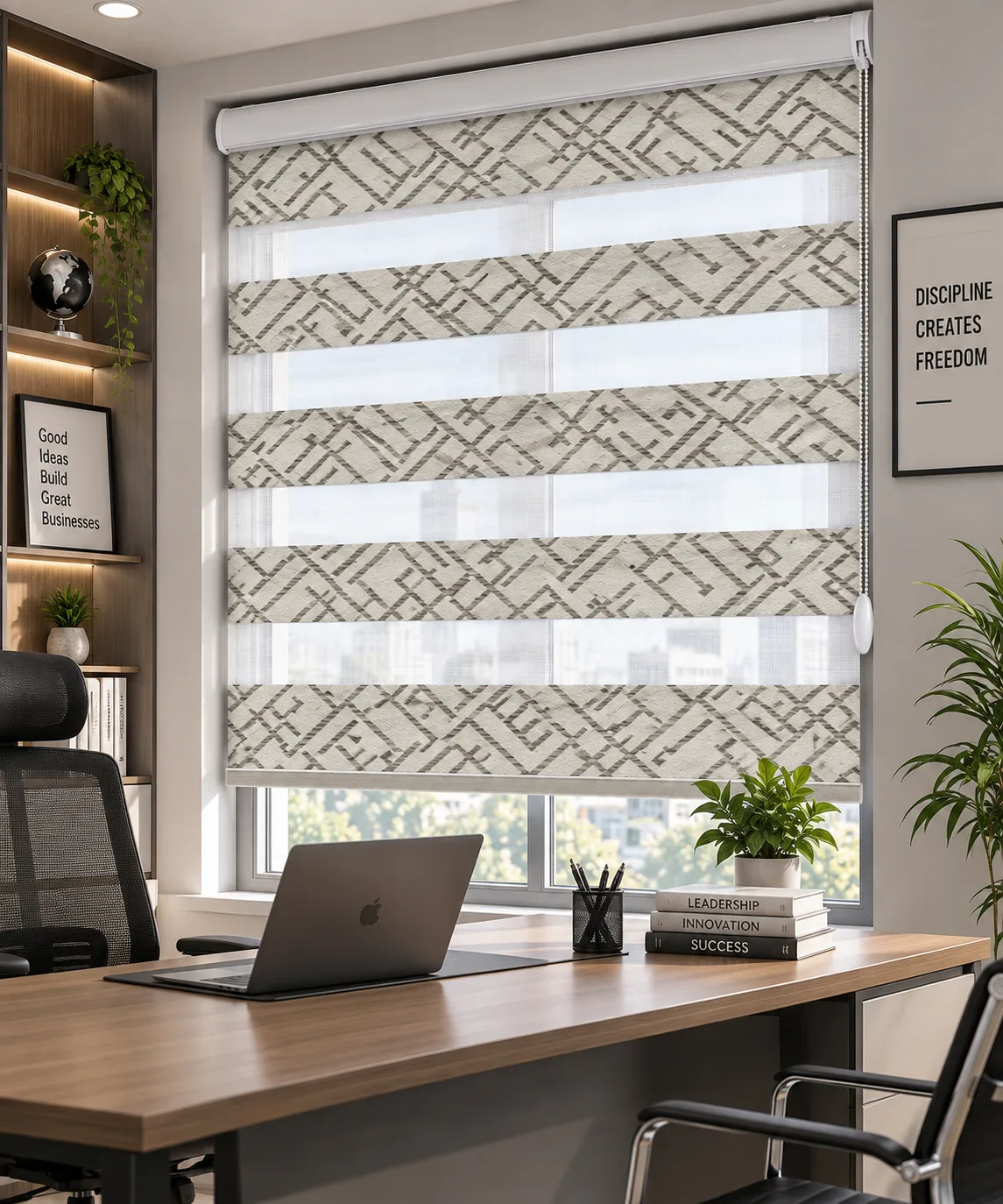
In an office, a blind is screen-glare equipment first and decoration second.
Office blinds have one job most homes never ask of them: make the computer usable at 2 pm. Everything else — privacy, heat, looks — follows from getting glare under control. Here is how to specify them.
The glare decision: openness percentage
Sunscreen roller fabrics are rated by how open the weave is:
- 5% openness: bright rooms, view preserved, still cuts harsh glare — the default for north and east-facing offices
- 3% openness: west and south glazing that gets direct low sun — dimmer, better on screens, view still there
- 1–2% openness: media rooms and projector spaces where you want the light mostly off
Sunscreen is the single most-specified office blind for a reason: it turns a glass wall into a usable one without putting everyone under artificial light.
Which mechanism, which window
- Sunscreen roller blinds: clean, low-maintenance, best for rows of equal windows and glass partitions — the office standard (fabric logic in the fabric guide)
- Vertical blinds: the pick for wide sliding glass and floor-to-ceiling runs; louvres tilt for light and slide to one side for a clear doorway
- Zebra (day-night) blinds: where staff want both view and privacy on demand — meeting rooms, cabins, reception
Recess mount is the norm
Offices usually mount inside the recess for a flush, tidy line down a row of windows — provided the recess is deep enough for the headrail to clear the frame. If glazing beads or handles intrude, go outside-mount with a 75 mm overlap; the trade-offs are in the mount comparison. For rows, consistent drop and stack side matter more than any fabric choice.
Practical office details people forget
- Cable-operated vs cordless: for tall windows, wands or motors; loose cords at head height are an snag risk near desks
- Stack side: decide which way each blind stacks so louvres never park in front of a monitor
- Fire & warranty: commercial fabrics and heavier headrails cost a little more and last far longer under daily use
Ordering office blinds window-by-window
Office blinds are priced per square foot with a per-window minimum, so a floor of identical windows usually averages down nicely — big area, shared setup. Configure exact widths and drops on the office blinds page; for wide glazed runs compare verticals and zebra blinds at the same size to see the rate difference before you commit. Measure each opening with the measuring guide, or capture a whole floor at once with the AR self-measure tool.
Not sure of your sizes?
Read our measuring guide or try the AR self-measure tool to get exact numbers.