
Explainers
Blinds for Aluminium Sliding Windows: What Actually Fits
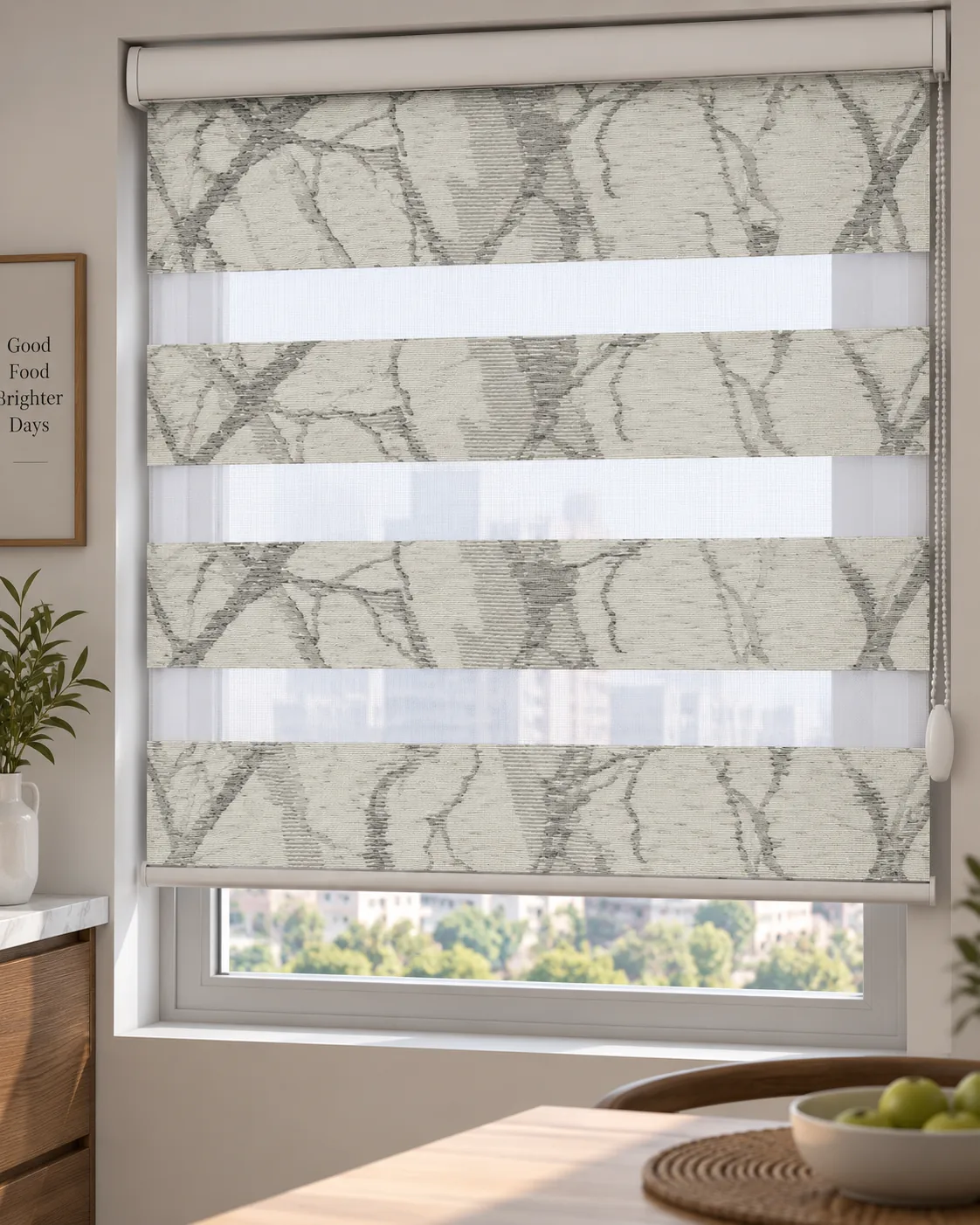
Sliding windows have no depth to spare. The blind has to live on the wall or the ceiling.
Walk into almost any flat built in India in the last twenty years and you will find aluminium or UPVC sliding windows: two or three glass panels gliding on tracks, with a handle and a lock sticking out. They are practical, but they make fitting blinds trickier than a plain casement window. Here is what works.
The three challenges of sliding windows
- Shallow recess: the frame often sits close to the inner wall, leaving little depth for a blind inside the opening.
- Handles and locks: they project into the room and can catch a blind that hangs too close.
- Mosquito mesh tracks: many windows have a third track for a mesh shutter, using up more depth.
Inside mount or outside mount?
Outside mount (most common)
The blind is fixed on the wall above the window or on the ceiling, overlapping the opening by 5–10 cm on each side. It clears handles easily, hides the aluminium frame, and blocks more light at the edges. For most sliding windows this is the safest choice.
Inside mount
Possible only if there is enough depth between the glass/handle and the inner wall edge. Measure the depth carefully: a standard roller needs a few centimetres for its brackets and fabric roll, and the fabric must hang clear of the handle. Read our full comparison of inside vs outside mount.
Which blind types suit sliding windows
Roller blinds
The slimmest profile. A roller blind sits flat against the wall and rolls fully out of the way, so the window can still be opened and closed easily for ventilation.
Zebra blinds
Zebra blinds have a slightly larger headrail cassette, which looks neat on an outside mount above the window. They give adjustable light without needing to be raised.
What to avoid
Bulky roman blinds stack at the top and can block the upper part of a short window. Vertical blinds work on sliding doors but look heavy on standard windows.
Handle clearance: the detail that matters
Measure how far the handle projects from the glass. On an outside mount, the brackets should hold the fabric far enough from the wall that it drops clear of the handle. If the handle is very prominent, ceiling or top-of-frame mounting with extended brackets helps.
One blind or two?
For a wide three-panel sliding window, two blinds side by side are often better than one: each half can be raised separately, the fabric is less likely to sway, and if you open one side for air, you can keep the other side shaded.
Measuring a sliding window correctly
- Decide the mount type first.
- For outside mount, measure the opening width and add 10–15 cm overlap total; measure height from the bracket position to the sill or a little below.
- Measure handle projection and the depth available.
Our measuring guide and AR measure tool walk through it step by step, or book a free site measurement in Delhi NCR.
Cost example
A typical 5×4 ft sliding window with outside mount (a little wider than the opening) comes to roughly 24 sq ft: about ₹2,400–₹3,100 in standard roller fabric, or ₹2,900–₹4,600 in zebra, GST included.
Mosquito mesh and blinds together
Many sliding windows have a mesh shutter on a third track. An inside-mount blind would have to clear the mesh frame as well as the glass, which rarely leaves enough depth. Outside mount keeps the mesh working normally: slide the mesh closed, open the glass for air, and lower the blind for privacy or shade. This combination is the most practical everyday setup in Delhi NCR flats, especially in the evening when mosquitoes are worst.
FAQs
Will a blind stop me from opening the sliding window?
Not if it is outside-mounted or has enough clearance — the blind rolls up and the panels slide freely.
Can blinds be fixed without drilling the aluminium frame?
Yes. Outside-mount brackets go into the wall or ceiling, not the aluminium.
Not sure of your sizes?
Read our measuring guide or try the AR self-measure tool to get exact numbers.