
Explainers
Blinds for Corner Windows: Making Two Walls of Glass Work Together
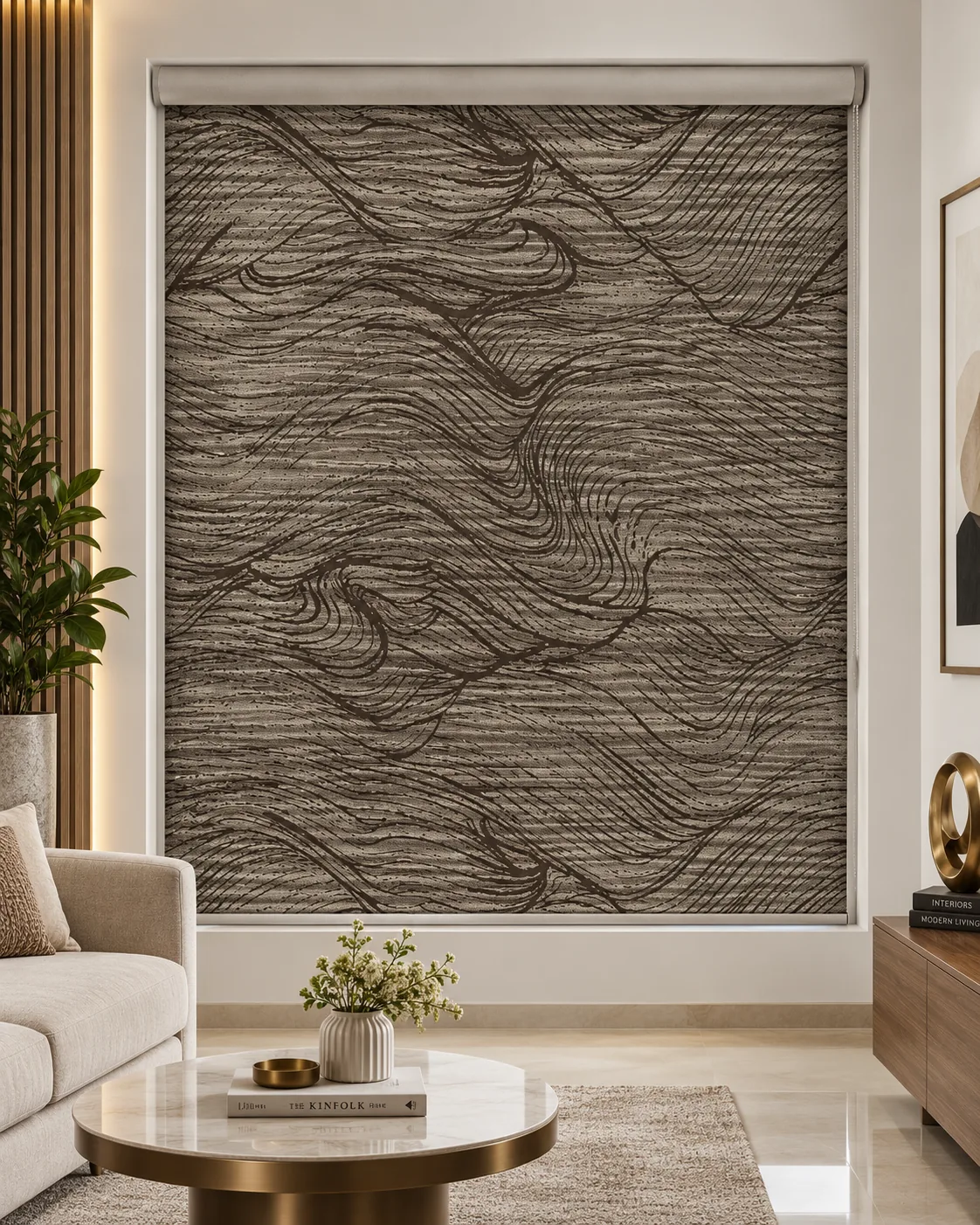
At a corner, two blinds must look like one decision.
Corner windows — glass on two adjacent walls meeting at a corner — are popular in modern flats, villas and offices. They bring wonderful light and wide views. The challenge with blinds is the corner itself: two blinds must meet neatly, operate smoothly and look like one design.
Types of corner windows
- Corner with a solid post: two windows separated by a wall or column at the corner — easiest to fit.
- Glass-to-glass corner: frameless or slim-framed glass meeting at the corner — trickier.
- Wraparound windows: several panes around a curved or angled corner.
The standard approach: one blind per side
Fit separate blinds on each wall. This lets each side be operated independently — useful because the two sides usually get sun at different times of day.
Managing the corner
Option 1: Butt-joint at the corner
Both blinds extend to the corner and meet edge to edge. One headrail stops slightly short so the other can pass in front. A small light gap at the corner is normal.
Option 2: Overlap
One blind extends past the corner so its edge covers the start of the other. This reduces light gaps but requires careful positioning so fabrics do not rub.
Option 3: Use the post
Where a column or wall section sits at the corner, mount each blind inside its own window or with outside mount ending at the post. This is the neatest result.
Keep heights and lines consistent
The two blinds should share the same top height, bottom height and fabric. Uneven bottom rails at a corner are very noticeable. If the window heights differ, align the tops and accept slightly different drops.
Best blind types for corners
- Roller blinds: slim and easy to align; available in blackout and sunscreen.
- Zebra blinds: neat cassettes look good at corners; bands should line up across both sides.
- Curtains: a continuous corner curtain track can wrap around; often combined with blinds.
Light from two directions
Corner rooms often get morning sun on one side and afternoon sun on the other. Choose the same colour on both sides, but consider a denser fabric for the side facing west. Read west-facing rooms.
Motorised corner blinds
Motorising both sides and grouping them on one remote raises and lowers them together, keeping heights matched. Motorisation adds roughly ₹3,000–₹6,500 per window.
Measuring corner windows
- Measure each side separately.
- Decide which blind passes in front at the corner.
- Allow for headrail depth so they do not collide.
- Note any obstructions — AC units, handles, switches.
Corners are a good case for a free site measurement across Delhi NCR. Our measuring guide covers basics.
Cost example
A corner with a 6×5 ft side (30 sq ft) and a 4×5 ft side (20 sq ft) totals 50 sq ft: roughly ₹5,000–₹6,500 in standard roller fabric, or ₹6,000–₹9,500 in zebra. Prices include GST, with a 3-year warranty.
Design tips
- Choose a colour close to the frame so the corner join is less visible.
- Use cassettes for a tidy top line.
- For glass-to-glass corners, consider a slightly darker fabric that hides the join.
Done well, a corner window with matching blinds becomes the brightest, most inviting corner of the home.
Corner windows in offices
Corner offices are prized for their light but suffer from glare on two sides. Sunscreen rollers in a dark colour on both walls keep the view and reduce glare on screens throughout the day.
FAQs
Can one blind wrap around a corner?
Roller blinds cannot bend around corners. Use one per side, or a curtain on a corner track.
How do I stop light at the corner?
Overlap one blind past the corner, or add a curtain for evening use.
Not sure of your sizes?
Read our measuring guide or try the AR self-measure tool to get exact numbers.