
Buying Guides
Best Blinds for Bedrooms: Blackout, Light & Privacy
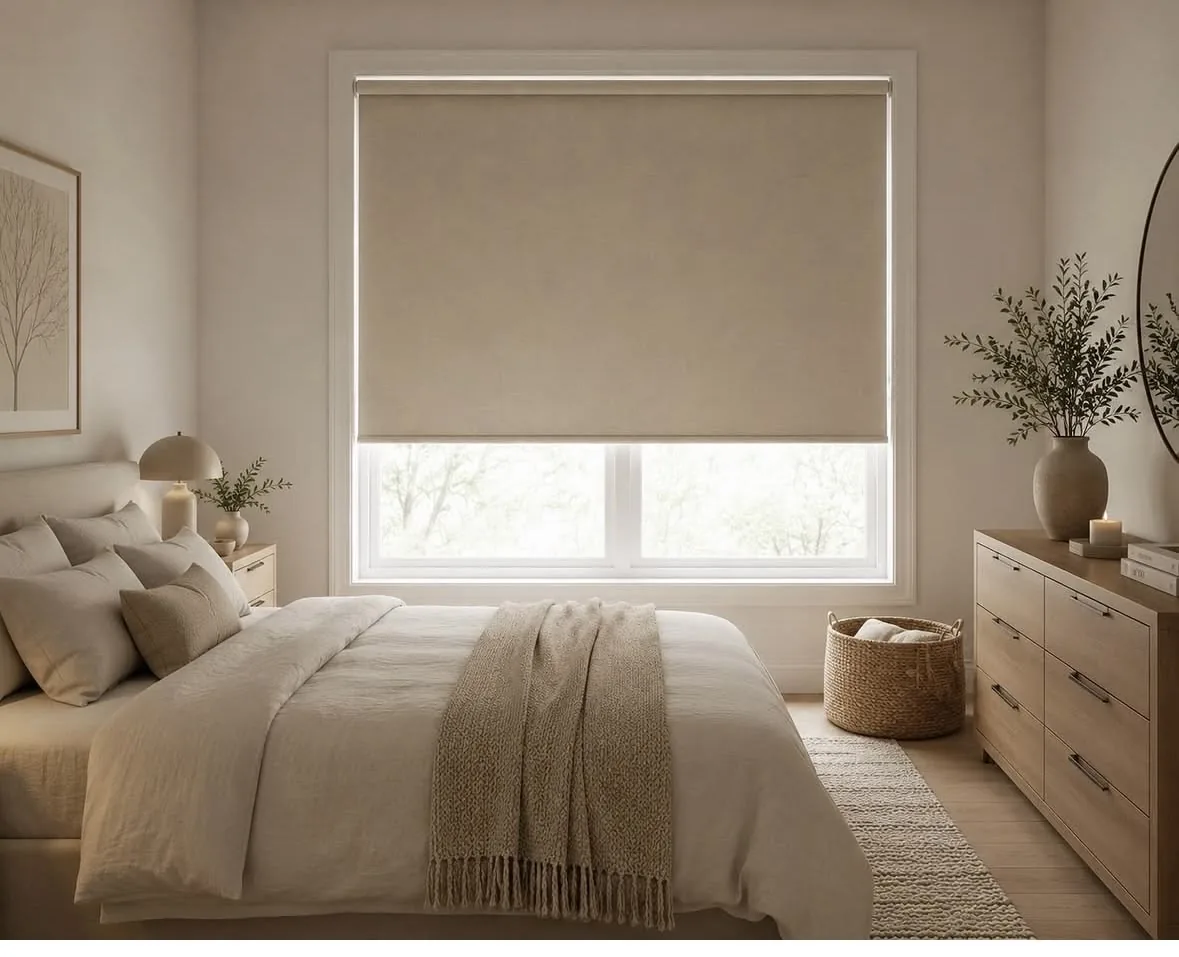
A bedroom blind has to do three jobs: sleep, privacy, and not look like an office.
Bedroom blinds have the most demanding brief in the house: block light for sleep, give privacy, keep the room warm or cool, and still look calm rather than clinical. Get these four and the style almost designs itself.
The three best bedroom blind types
- Blackout roller blinds: the reliable dark-room foundation. Light-block depends on edge coverage, not just fabric — see what blackout blinds are
- Honeycomb (cellular) blinds: the insulating choice — the air cells keep winter warmth in and summer heat out, ideal for a room you want cosy and quiet
- Zebra (day-night) blinds: sheer and dim bands in one blind, so mornings are soft and nights are private without a second curtain
Choose by how the room behaves
- Street-facing / early sun: blackout is non-negotiable for sleep — go cassette-and-channels if you want it truly dark
- Warm sleeper or noisy street: honeycomb for the thermal and sound benefit
- You love morning light but need privacy: zebra or a day-night honeycomb
- Soft, traditional look: blackout-lined roman blinds — fabric face, dark room
Layering — the hotel look, the Indian climate
The classic bedroom layer is a blackout roller at the glass for sleep plus a light sheer for daytime privacy. If you would rather have one blind that does both, a day-night honeycomb or zebra replaces the pair — the trade-offs are in the sheer & day-night guide.
Colour for a restful room
Warm neutrals (ivory, sand, oat) read softest at night; greys and taupes suit modern rooms; deeper tones add cosiness but show dust. In a dark bedroom, lighter fabrics keep the room calm when the blind is up. Because a blackout's face and its dark backing can differ, order swatches before you commit to colour.
Cost by type
A blackout roller starts around ₹195/sq ft, a day-night zebra near ₹185, and insulating honeycomb at ₹240 (before the blackout lining that turns a honeycomb into a true sleep blind). Because bedrooms usually need full coverage for the dark, outside-mount overlap is the usual spec — measure with the measuring guide or the AR tool, then configure a dark, quiet room on the blackout blinds page.
Not sure of your sizes?
Read our measuring guide or try the AR self-measure tool to get exact numbers.