
Buying Guides
Roller Blinds Fabric Guide: Opacity, Texture, Durability
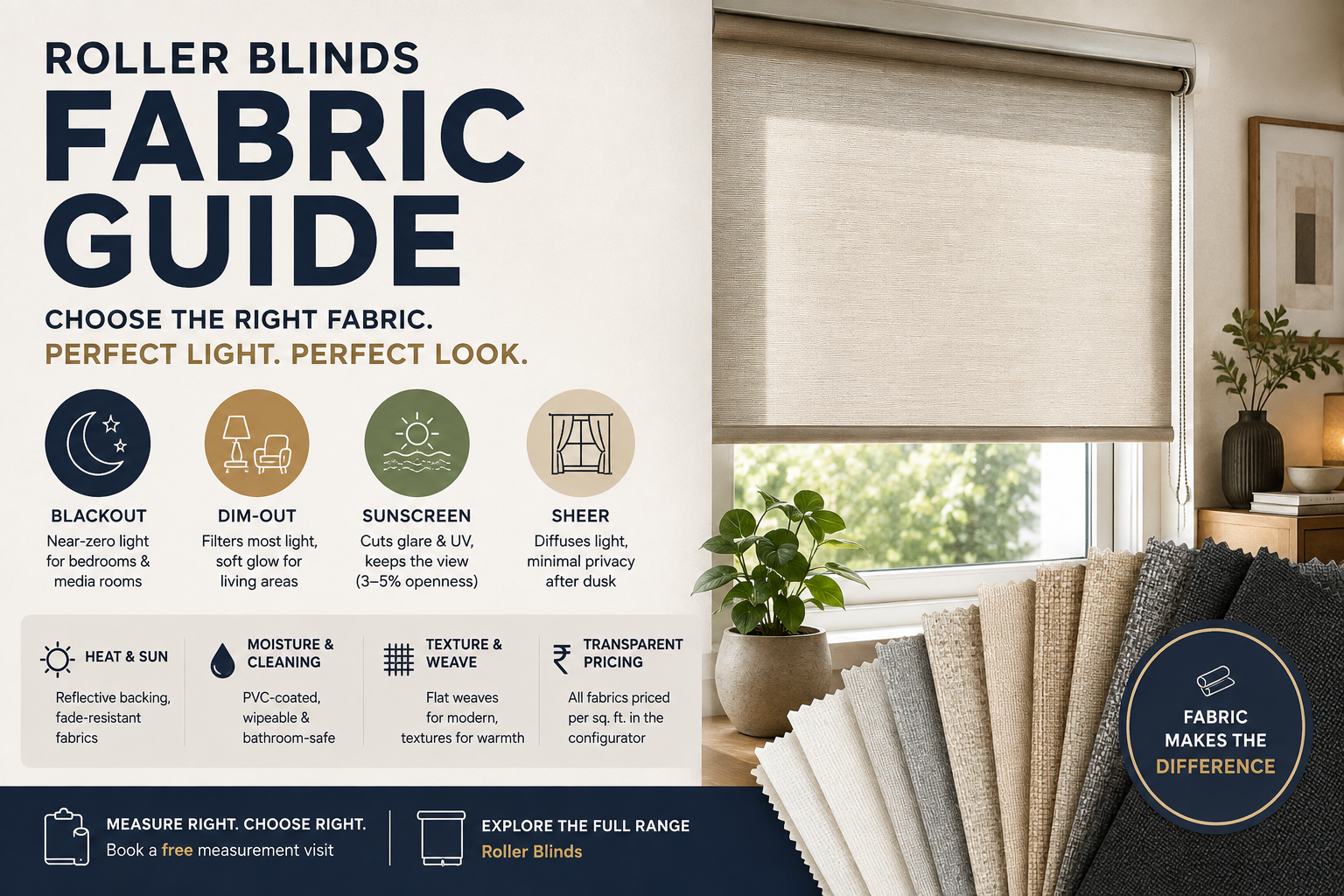
The mechanism lasts a decade; the fabric decides how the decade looks.
A roller blind is a simple machine — tube, fabric, chain or motor. Which means the fabric is the decision. It sets the light, the look, the privacy and how the blind ages. Here is how to choose well.
Opacity: the four grades
- Blackout: coated core, near-zero light transmission — bedrooms and media rooms. Details in how blackout blinds work.
- Dim-out: filters most light; a soft glow remains at the edges — living areas
- Sunscreen: an open weave (typically 3–5% openness) that cuts glare and UV but keeps the view — balconies and offices
- Sheer: diffuses light, minimal privacy after dusk — layered looks
Texture and weave
Flat weaves read modern and hide dirt; slub and linen textures add warmth and forgive small wrinkles. Printed fabrics let you make the window a feature — prints sit on the room-facing side only, so the glass side stays white for heat reflection.
Heat and sun (the Indian context)
- West-facing windows: blackout or sunscreen with a reflective backing
- Prolonged direct sun fades dye lots — order all same-room blinds together so fabric batches match
- PVC-coated fabrics wipe clean and tolerate kitchen grease
Moisture and cleaning
Polyester weaves handle bathrooms; natural blends do not. Dust rolls off a flat weave with a vacuum brush monthly; textured weaves want a lint roller.
Matching fabric to room, quickly
- Bedroom → blackout, front roll
- Living → dim-out texture or sheer layer
- Balcony/office → sunscreen 3–5%
- Kitchen → PVC-coated wipeable
Every fabric grade on the site is priced transparently per square foot in the configurator — see the full range at roller blinds, and order fabric samples through a free measurement visit.
Not sure of your sizes?
Read our measuring guide or try the AR self-measure tool to get exact numbers.