
Buying Guides
Monsoon-Proofing Your Windows: What Blinds Need in July
Monsoon does not ask whether your blind is ready. It tests anyway.
Monsoon damage to window treatments is rarely the rain. It is the humidity that arrives first and the seepage that arrives second — and the blind is often the first thing to show either. Ten minutes in June prevents the season's small disasters.
Fabric by damp-tolerance
- Woven roller fabrics: dimensionally stable, quick-drying, unaffected by ambient humidity — the default correct answer
- Blackout coatings: fine with humidity, unhappy with standing water; keep drops from ending in a puddle on the sill
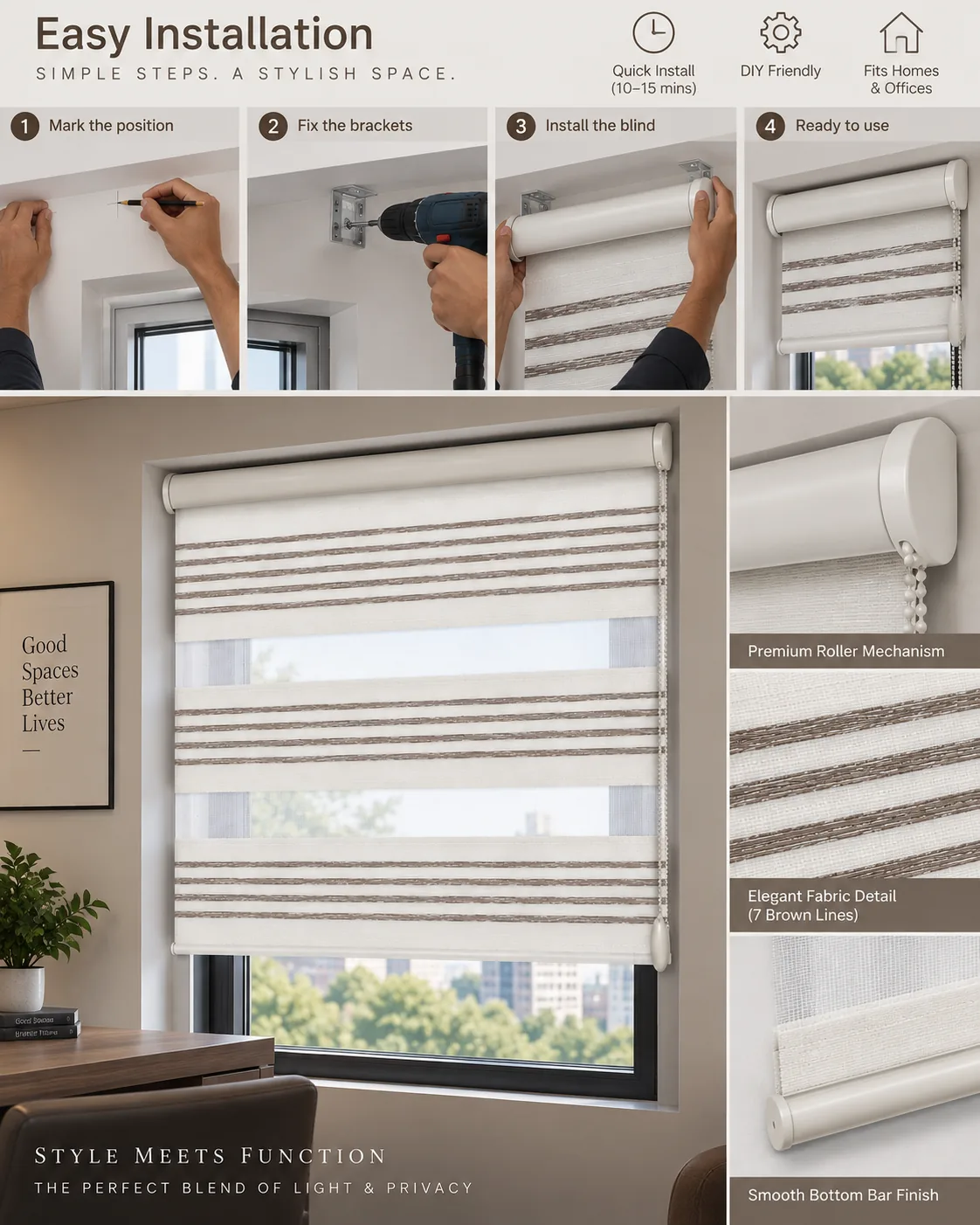
- Zebra: the same woven stability with its own value in monsoon light — soft, flat, flattering grey-day illumination
The wrong answers are the ones nobody sells hard: deep textures that hold moisture, and anything mounted within splash distance of an open window's drip line. If the window is left open in rain by habit, mount higher or pick a sill that sheds.
The June checklist
- Seepage first, blind second: a wet patch at the blind's top bracket is a waterproofing problem wearing a blind costume — fix the wall, mortar and painting before any repair conversation
- Wipe and dry fully after the first big storm, top to bottom; rolled-up damp fabric is the only real fabric danger
- Check the drop length at the sill: a blind hanging into a rain pool will wick; shorten the drop by an inch or raise the mount
- Balcony doors: zebra handles the season beautifully — just raise it fully during storms rather than using it as a rain screen
The quiet win of monsoon blinds
Between storms, July light through a light-filtering roller is the softest light Delhi sees all year — the reason rooms photographed in monsoon look better than in May. Choose the fabric for your summer logic and let monsoon be a bonus: roller from ₹100/sq ft, zebra ₹120–₹190, GST included, 10 sq ft minimum, all in the 2026 price guide.
If a leak did reach a fabric, photograph it and bring the blind's measurement to Block E, Mangolpuri — most drip cases are a length adjustment or a mount change, both quick, and none of them need a new blind in most cases.
Not sure of your sizes?
Read our measuring guide or try the AR self-measure tool to get exact numbers.