
Guides
Inside Mount vs Outside Mount Blinds: Which Is Right?
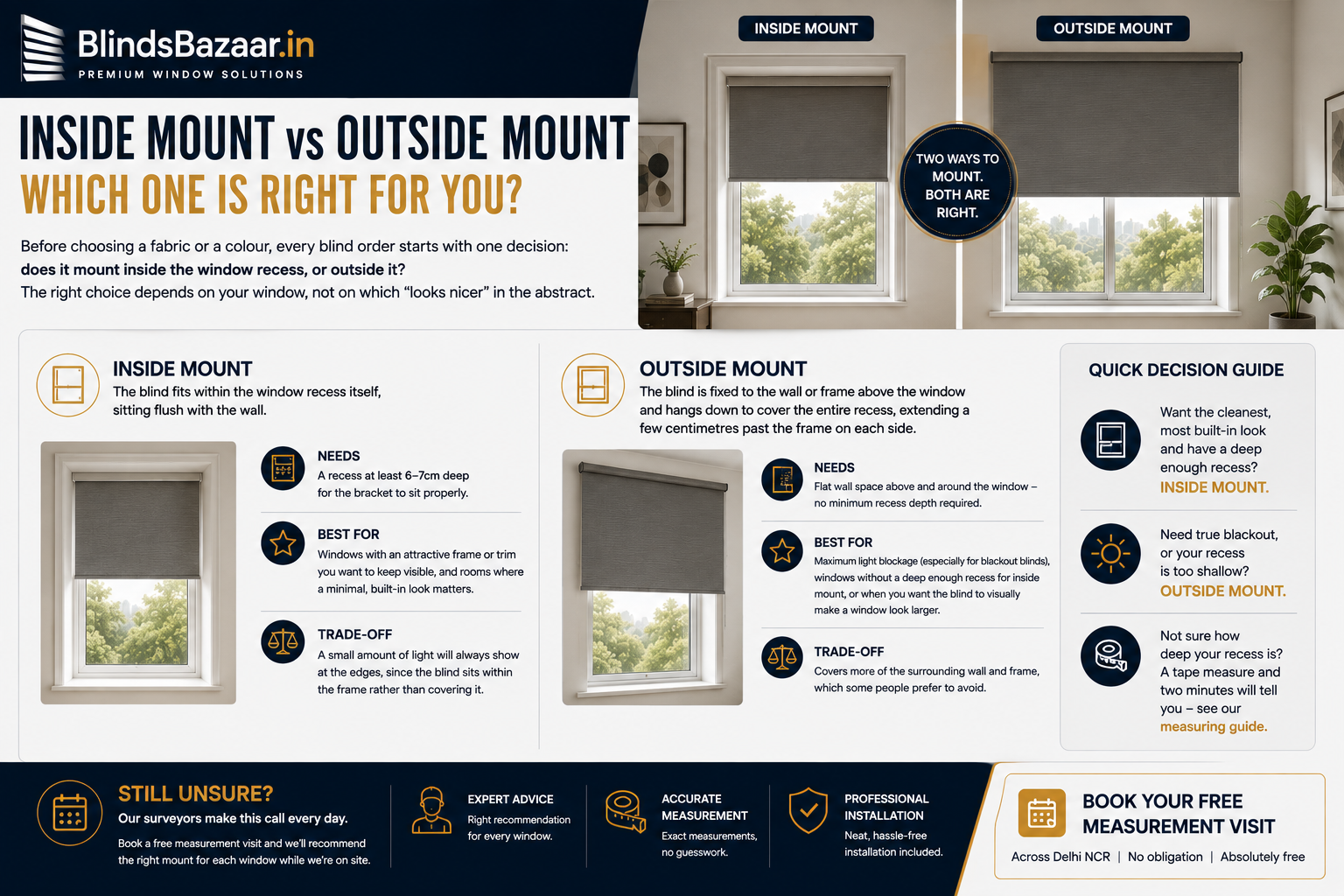
Inside recess flatters the window; outside mount flatters the room.
One of the first decisions with any new blinds — inside the recess or outside it? Both work; they just do different jobs. Here is how to choose per window, not per house.
Inside mount (inside the recess)
The blind sits within the window frame, flush with the wall.
- Look: clean, architectural, shows off the window shape
- Light control: small gaps at the edges let in a sliver of light
- Best for: deep recesses, rooms where you want the blind to disappear, pairing with curtains
- Needs: a recess at least 50–60 mm deep and reasonably square
Outside mount (on the wall or frame)
The blind fixes above the window and covers it with overlap.
- Look: makes the window read larger; a framed, layered feel
- Light control: the overlap is what makes blackout blinds actually black
- Best for: shallow or no recess, blackout bedrooms, uneven openings
- Needs: clear wall space around the window for the overlap
How to decide in ten seconds
- Is the recess deeper than 50 mm? If no — outside mount.
- Is near-darkness the goal (bedroom, home theatre)? Outside mount.
- Do you want the blind noticed or unnoticed? Unnoticed — inside. A design feature — outside.
- Small window you wish were bigger? Outside mount with generous overlap.
Does it change the price?
Slightly. Outside mounts are larger (the overlap adds area) and our pricing is per square foot — an outside-mount blackout roller will cost a little more than its inside-recess twin, and blocks meaningfully more light. Our measuring guide covers the exact overlap rules for both mounts.
Still unsure? A free site visit settles it in person — book a measurement and the fitter will recommend the mount for each window. Or browse what each looks like in bedroom and living room settings.
Not sure of your sizes?
Read our measuring guide or try the AR self-measure tool to get exact numbers.