
Installation
How to Install Roller Blinds Yourself: A Step-by-Step DIY Guide
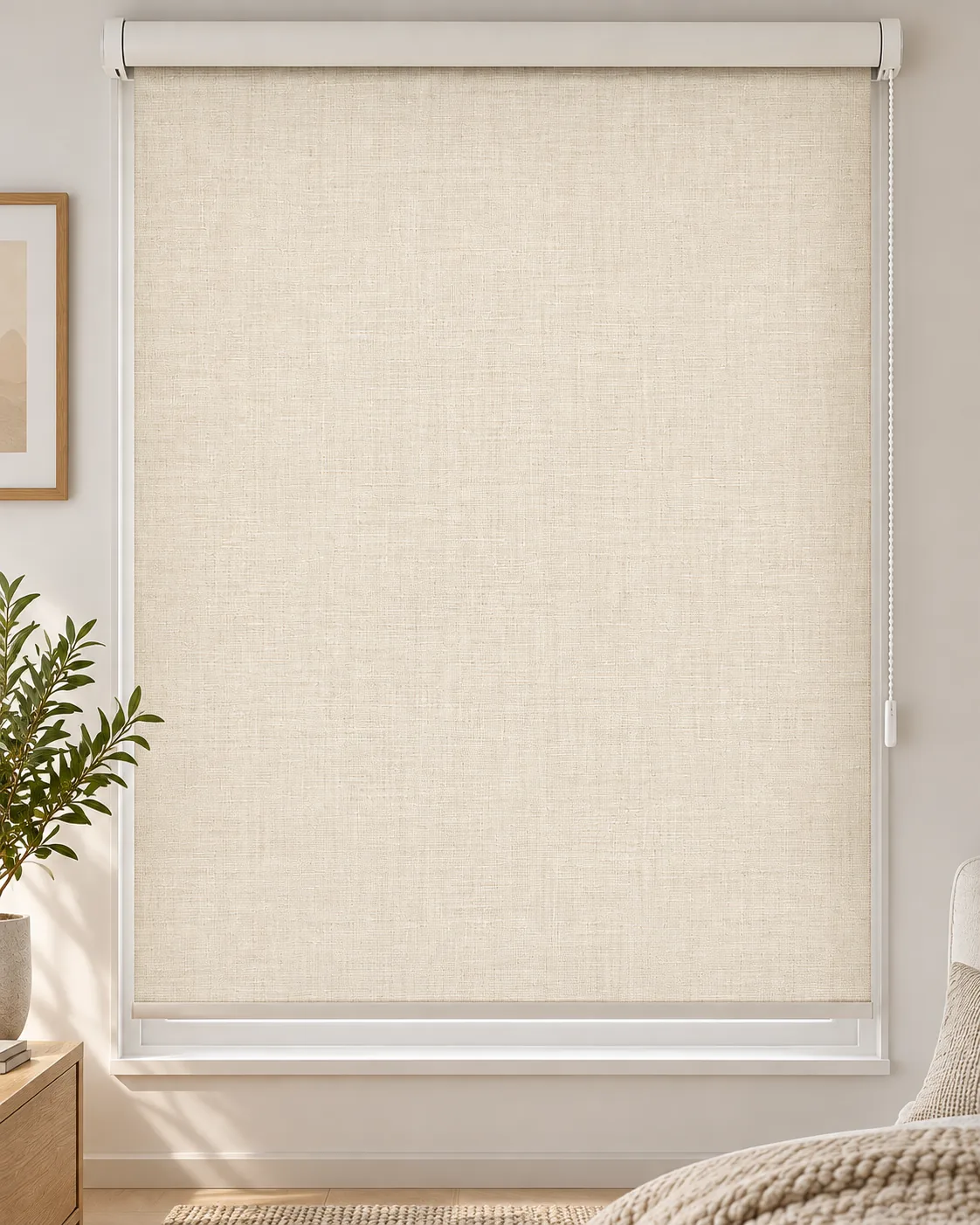
Installing a roller blind is easy. Installing it level is the whole skill.
Installing a roller blind is one of the more manageable home improvement jobs, as long as you have the right drill and patience with measuring. This guide walks through the full process for a typical Indian home with concrete or brick walls.
Tools and materials
- Hammer (impact) drill with masonry bits matching the wall plugs
- Screwdriver or drill driver
- Spirit level and measuring tape
- Pencil
- Wall plugs and screws (usually supplied in the installation kit)
- Stable ladder
- Safety glasses
Step 1: Check the blind and parts
Unpack the blind and check the brackets, end caps, chain and any child-safety tensioner. Confirm the size matches the window and note which side the chain should be on.
Step 2: Decide the bracket position
Inside mount
Brackets fix to the top of the window recess, a few millimetres in from each side so the blind fits between them.
Outside mount
Brackets fix to the wall above the window or to the ceiling, usually 5–10 cm above the opening and extending beyond each side. Read inside vs outside mount.
Step 3: Mark the holes level
- Hold a bracket in place and mark the screw holes.
- Measure the exact distance for the second bracket based on the blind width.
- Use the spirit level between the two positions — this is the most important step.
An unlevel blind rolls unevenly and the fabric drifts to one side.
Step 4: Drill safely
- Check for wiring — never drill in line above switches or sockets.
- Start slowly, then use hammer mode.
- If you hit steel reinforcement, move the hole slightly.
Our detailed guide to drilling concrete for brackets covers this.
Step 5: Fix the brackets
Insert wall plugs flush with the wall, then screw brackets firmly. Check level again before moving on.
Step 6: Fit the blind
- Insert the chain-side end of the roller into its bracket first.
- Push the other end into the opposite bracket until it clicks or locks.
- Make sure the fabric hangs from the correct side — front roll or back roll. See front vs back roll.
Step 7: Test and adjust
- Lower and raise the blind fully several times.
- If the fabric drifts to one side, the brackets are not level — adjust slightly.
- Check the blind stops at the right height and does not hit the sill or handle.
Step 8: Fit the child-safety tensioner
Pull the chain taut and fix the tensioner to the wall or frame so the chain cannot form a loose loop. This is essential in homes with children or pets.
Common DIY problems and fixes
- Blind won’t click into brackets: bracket spacing too wide or narrow; adjust one bracket.
- Fabric rolls crooked: brackets not level.
- Plug spins in the hole: hole too large; use a larger plug or reposition.
- Chain slips: check the clutch is seated correctly in its bracket.
More in our roller blind problems and fixes guide.
When to call a professional
Consider professional installation for tall windows, ceiling mounts, POP false ceilings, motorised blinds, very wide blinds or if you are not comfortable drilling concrete. Our own team installs across Delhi NCR, and every order includes a free installation kit. Learn what happens at an installation visit.
Cost
Made-to-measure roller blinds start at ₹100 per sq ft, GST included, with a 3-year warranty on fabric, mechanism and motor.
FAQs
How long does it take to install one roller blind?
Typically 30–45 minutes for a first-timer, less with experience.
Can I install a roller blind on a UPVC frame?
It is generally better to fix into the wall or ceiling rather than drilling the frame itself.
Not sure of your sizes?
Read our measuring guide or try the AR self-measure tool to get exact numbers.