
Buying Guides
Honeycomb Blinds in India: Are They Worth It?
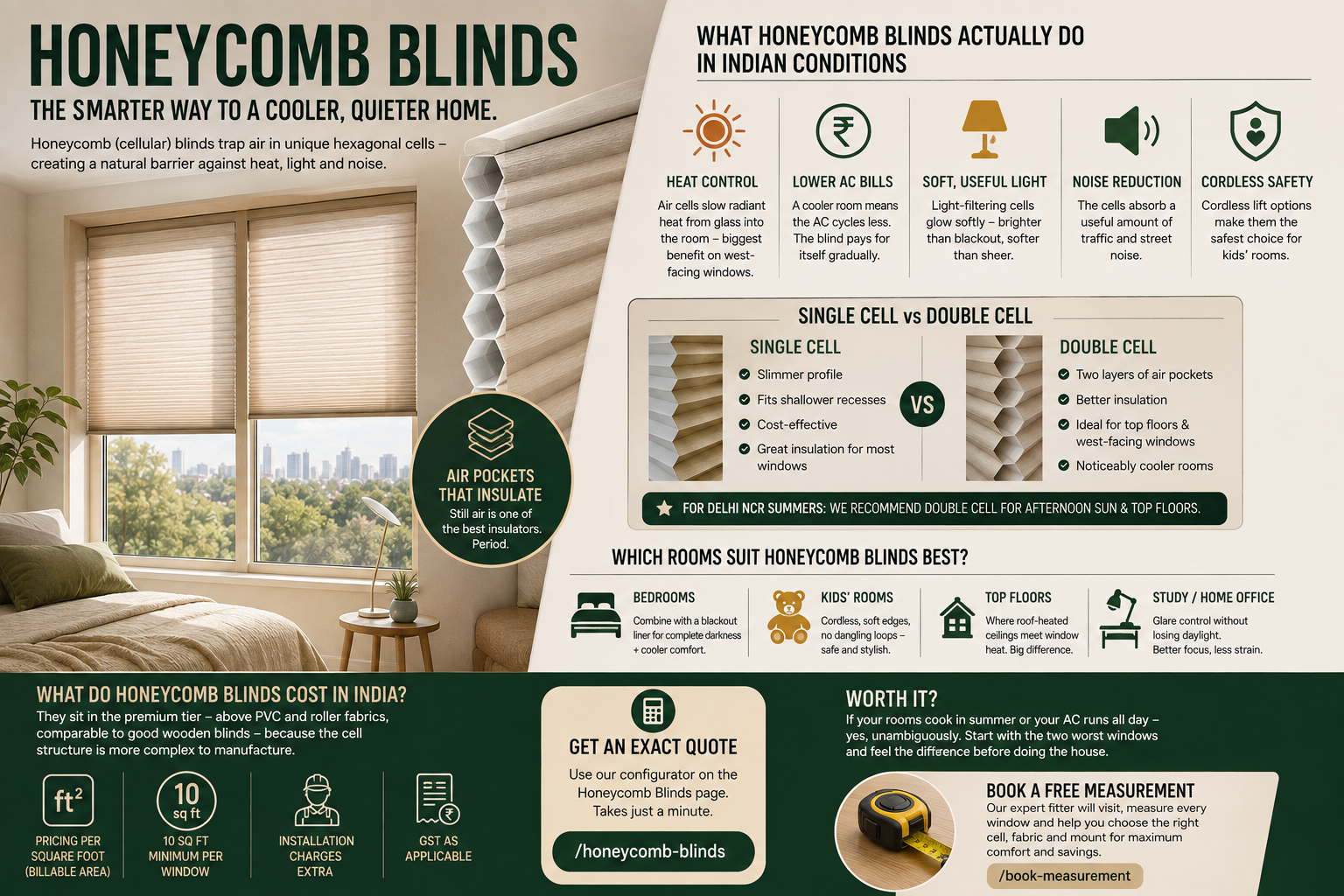
The air trapped in a honeycomb cell is free insulation, all summer long.
Honeycomb (cellular) blinds look like a row of hexagons from the side — and those cells are the whole point. Each one traps a pocket of still air, and still air is one of the best insulators there is. In a country where April–June is a five-month argument with the sun, that matters.
What honeycomb blinds actually do in Indian conditions
- Heat: the air cells slow radiant heat from the glass into the room — the biggest benefit on west-facing windows
- AC bills: a cooler room means the AC cycles less; the blind pays for itself gradually
- Light: light-filtering cells glow softly — brighter than blackout, softer than sheer
- Sound: the cells absorb a useful amount of traffic noise
- Cords: cordless lift options make them the safest choice for kids' rooms
Single cell vs double cell
Single-cell honeycombs are slimmer (fit shallower recesses) and cost less. Double-cell stacks two layers of pockets — noticeably better insulation for top-floor and west-facing windows. For a Delhi NCR summer, we usually recommend double cell on any wall that gets afternoon sun.
Which rooms suit honeycomb blinds best?
- Bedrooms — combined with a blackout liner for dark + cool
- Kids' rooms — cordless, soft edges, no dangling loops
- Top floors — where roof-heated ceilings meet window heat
- Study / home office — glare control without losing daylight
What do honeycomb blinds cost in India?
They sit in the premium tier — above PVC and roller fabrics, comparable to good wooden blinds — because the cell structure is more complex to manufacture. Pricing is per square foot of billable area with a 10 sq ft minimum per window, plus installation and GST. An exact quote takes a minute with our configurator on the honeycomb blinds page.
Worth it? If your rooms cook in summer or your AC runs all day — yes, unambiguously. Start with the two worst windows and feel the difference before doing the house. Book a free measurement and the fitter will point at the windows that need them most.
Not sure of your sizes?
Read our measuring guide or try the AR self-measure tool to get exact numbers.